Category: Uncategorized

  • Akogun Oyedepo Profile

    Akogun Oyedepo Profile

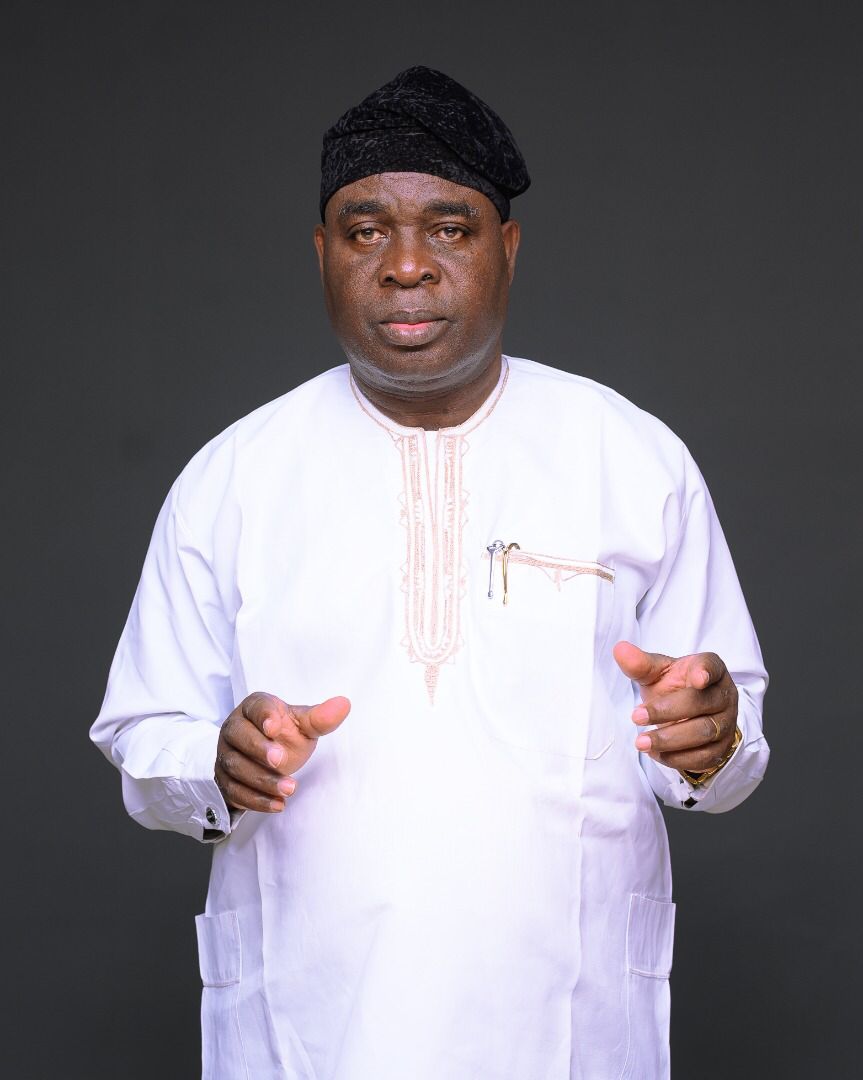
    Barr. Akogun Iyiola Oyedepo is a distinguished lawyer, statesman, author, and community leader from Isanlu-Isin, Isin Local Government Area of Kwara State.

    Born on 13th August 1954, Akogun Oyedepo has dedicated over four decades to legal practice, public service, political leadership, community development, and intellectual engagement.

    He is the Principal Partner of Iyiola Oyedepo & Co. and the President/CEO of Nations Leadership Institute (NLI), an institution committed to leadership development and nation building..


    A Life of Service

    Throughout his career, Barr. Oyedepo has served in various capacities including:

    • Member & Chief Whip, Kwara State House of Assembly
    • Commissioner for Agriculture & Natural Resources, Kwara State
    • Commissioner for Commerce, Industry & Co-operatives
    • Chairman, Peoples Democratic Party (Kwara State)
    • Chairman, Governing Council, Federal Polytechnic Ado-Ekiti

    He is widely recognised for his commitment to:

    • Grassroots empowerment through cooperative societies
    • Community infrastructure advocacy
    • Legislative reform and democratic accountability
    • Political education and civic mobilisation

    Author & Public Intellectual

    Barr. Oyedepo is the author of six books addressing governance, politics, faith, and public life, including:

    • Shonga and the Looting of Kwara State
    • Letters to the Emir
    • Twenty-One Political Lies in Nigeria
    • Politics, Politicians and Christianity

    He remains an active public affairs commentator, engaging national discourse through radio, television, print media, and social platforms.


    Download Full Profile

    For a detailed overview of his education, political appointments, achievements, community contributions, and publications:

    👉 [Download Full Profile (PDF)]

    (Upload the PDF to WordPress Media Library and paste the link here.)

  • THE WEALTH OF KWARA

    THE WEALTH OF KWARA


    Last month I discussed the destruction of the solid foundation of Kwara state under the topic THERE WAS A KWARA STATE. Our knowledge of the current destruction that is passed for development; is better explained with missed opportunities and possibilities caged in frustration by leadership that turns Kwara State to a fiefdom of private or family enterprise. Under this write-up, we shall examine leadership that gives us minimum in governance and followership that are satisfied with governments that often jump and land on the same spot. This has been out lot at least in the last twenty-six years. A crop of docile citizen is created that succumb to despondency and either throw their hands up and ask a question; can it ever be better than this? Some of such citizen also conclude that; it can never be better than this.

    But there are great possibilities in our unexploited potentials if we are governed with wisdom, knowledge, and political will to do the most appropriate. Kwara State is full of potentials in human and material resources that can solve our problems of
    underdevelopment.

    Some people have categorized some states in Nigeria as viable and some unviable. Such people see states that can survive without monthly federal allocations or states with fat monthly allocations, as viable. The states that are in this category are not more than three or four: Lagos, Rivers, Bayelsa, Akwa-Ibom and perhaps a few others. From my studies we delude ourselves, if we categorize Kwara to be one of such states. The internally generated revenue of Kwara State cannot sustain the state for one month. We do not have enough statutory monthly allocation to address the challenges of the state even despite the humongous monthly allocation that come to our treasury in recent years.

    There is no state that is not viable in Nigeria, their unviability is imposed by leaders that are not innovative, lack appropriate vision, skills and strategies for development. States stepped in selfishness and corruption can never move forward. If a person, community, unions, etc are viable, there is no political space that cannot be made viable through human ingenuity, appropriate skills and strategies of organization guided by altruistic purpose.

    The strength and wealth of a people is not necessarily in its population, mineral resources and other natural resources. But if all these are accentuated by good leadership; they can be of great help. The United Kingdom’s population by this November 2025, is 69.7 million less than two third of the population of Nigeria and it has a land area of approximately 242, 945sq km. At its zenith in 1920, British Empire was the largest in history, covering 35.5million square kilometers which was then one quarter of the whole world. It then had dominions over colonies, protectorates in Asia, Africa, North America and the Caribbean. It was so large that it was commonly said that the sun never set on the empire. This was achieved by a people of 42.9 million (1920) population and a small portion of the space of the world. Singapore has a population of 6.11 million as at June 2025, and has no significant natural mineral resources, other than its strategic location. From obscurity of 1965, it has emerged from third world to the first world. Japan is a country of 123.9 million people with negligible mineral resources. The country largely depends on imported minerals to power its industries. It rules the world in automobile and electronics. An unproductive large population might be a dumping ground for the finished products of developed economy. Such large population can only be of advantage, if developed in science, technology and quality if its organization.

    Therefore, Kwara is rich in potentials but poor in management. One of the major untapped potentials for greatness is the population of the state. By the 2023 population projection, the State has a population of 3.5million people. The population of the state is made up of 70% of young people that are largely unemployed and perhaps unemployable as a result of deficient training and education. It is largely a redundant population. The state has a land area of 35, 705 square kilometers. Though, the land area is enough to sustain the economic activities of the population, it is left fallow as a result of poor policy options and misplaced priorities. The climate characteristics of Kwara State are two main seasons of wet and dry. It has adequate rainfall that can support agriculture and rivers that can even support all year-round agriculture if irrigated for such purpose. The land is generally fertile and can support varieties of crops in different parts of the state. Agriculture, if therefore supported with the varieties of crops on the fallow land will produce raw materials that will make agriculture the handmaid of industrialization.

    Since 1999, that we have been electing our leaders periodically, there had been no government that had turn our population to any economic advantage. What we have produced thus far, is restless youths that are rendered economically immobile and many are now hooked on drugs, alcoholism and prostitution. Those that are to be productively engaged waste their energies on violence and other forms of criminality. The only government that pretended to encourage agriculture brought foreigners to do the work which is the mainstay of the economy of the state. Studies have shown that Shonga farm is a huge fraud. Though extensive and fertile is our land, farmers of the state are not motivated to produce and the land and the favorable weathers contribute negligibly to economic prosperity of the state. This is a huge waste of the wealth of the State.

    The main mineral resources that are available in Kwara State are petroleum as primary fuel for transportation, electricity generation, raw materials for plastics, etc. There is gold, for finance, investments and jewelry, etc. We have limestone, a key raw material for cement and concrete, etc. Marble is abundantly available for construction and decoration in flooring, etc. There is feldspar used in glass and ceramic industries. Our clay is good for bricks for construction and tiles, pottery and ceramics, etc. We also have Kaolin, for technology materials and decorative items, ceramics and porcelain manufacturing among others. There is in abundance quartz for technology in building materials and decorative items. Granite is available and used for durable kithcentops, flooring and wall cladding in both residential and commercial buildings. Laterite is commonly available for construction and as a source for mining metals, etc.

    Though section 44(3) of the 1999 constitution places the ownership and control of mineral resources of the nation exclusively in the hand of the Federal Government of Nigeria, there is no excuse for Kwara State not to be a major player in the exploitation of mineral resources under its soil. Nigerian Minerals and Mining Act have spelt out how individuals and corporate bodies like Kwara can obtain mining license to mine minerals within and outside Kwara State. All that our governments has to do is to either obtain the licenses for itself or encourage individuals to do so and partner with them. Our governments rather encourage or look the other way, while illegal miners fleece off the mineral resources of the state. Another huge waste of the wealth of the State.

    Tourism which includes natural tourists attractions, cultural and historical sites are part of the wealth of Kwara State. Tourism if well developed can make Kwara State a very viable state in Nigeria. It can make the state a hub for global visitors seeking fun and information. The natural tourists’ sites include: Owu Falls, which is the highest and most spectacular waterfalls in West Africa with a beauty that is wonderful to behold. Even along the axis that has the Owu water falls, are two water falls that are less prominent, but nevertheless spectacular; Atii and Aise water falls at Isanlu-Isin. In Oke-Ero Local government area of the state and not far from the Owu water falls there is the Ero Omola waterfalls. In Ilorin there is the Sobi Hill. The cultural and historical sites in Kwara state include the Esie Museum with a collection of soapstone figures, Ilorin Central Mosque, a wonderful architectural landmark, Emir palace which is the seat of tradition. There is Olomakas shrine in Oyun and the popular Patigi Regatta festival. We also have in Kwara state the cultural Egungun Elewe of the Igbominas, the Tankai dancers from Baruten and the Ijakadi from Offa. Even Kwara State can create or enable individuals to create new tourists’ attraction centers. For example, if Asa River can be dredged provided with facilities for connivences and speed boats to ply the environment, it will make for money spinning tourists and entertainment centers.

    If all the tourists center above can be well packaged for tourism economy, they will expose Kwara to the whole world and tremendously improve the internally generated revenue efforts of the state. Most of what can be done to develop tourism can only be provided by government. Many of the sites lack infrastructures like road, water, electricity and security. Government is appropriately located to provide all these. Government needs to provide the necessary facilities to the centers so as to attract foreign and local investors. And as to the cultural festivals, government needs to encourage the yearly celebration of the festivals as it is being done at Olojo at Ile-Ife and Osun Osogbo festival at Oshogbo in Osun State. The same is being done yearly at Calabar and Abuja festivals. One can only imagine a day of carnival that will host egungun elewe of the Igbomina, Tankai Dancers of the Barubas, Ijakadi of Offa, Durbar of Ilorin, symbolic Awon mass marriage, igunnu of the Nupes annually. This will not only unite the people of the state but also improve the economy of the state.

    The land, the people, the mineral resources, natural sites, cultural festivals and advantageous location are part of the wealth of Kwara State. But do we harness these for the development of this state? What do we do instead? The main source of the revenue that sustains Kwara State is the monthly statutory allocation. Monthly statutory allocation is largely an abuse of federalism, which remains the aspiration of the people of Nigeria. I foresee that one day, this main source will dry up. In as much as there is ceaseless agitation for resource control, a time will come that the agitators will succeed. Once that is done, the main lifeline of this state shall be cut off. That is when we shall all know that we are economically dressed in a borrowed robe and our state shall become truly unviable. If only we can make hey when the sun shines; the looming catastrophe may elude us.

    The only thing that needs be done is to invest what we now have, in the form of monthly statutory allocation to establish an economy that is purely controlled by the people of Kwara State.

    Some people glorify what they call economic feat of monthly generation of about four billion revenues. The first question that we need to ask is whether the sum of four billion naira in a month can sustain Kwara State. Kwara State needs to pay salaries of workers, maintain services in terms of recurrent expenditures. The state needs to embark on the upgrade of its education and health facilities, support agriculture, maintain roads and open up new ones, provide safe water for the people, provide adequate security for the people, maintain the costly life styles of the people in government, etc. Can the sum of four billion naira currently said to be generated monthly, be enough for all the above?

    But the four billion monthly internally generated revenue is even a deception. The previous government re-packaged the former Internal Revenue Board and now calls it Kwara State internal Revenue Services (KWIRS). My investigations have shown that the creation is substantially in the change of name. The effect and the celebration of its effectiveness, efficiency and success stories are another set of drama. The mobilization of monthly four billion naira is not from encouraging the productive prowess of the people of this state, but rather from over taxing the people for whom the government have not been too responsible. Taxation must go with responsibility of government to the welfare and economic prosperity of the people. If the existing companies and businesses are taxed, how many businesses, local or foreign has the governments attracted to Kwara State since 1999? Those that are in the state before or during the regimes since 1999, what has the governments done for them in the areas of water, electricity, security and all others things that make businesses to have seamless operation? I am of the firm belief that businesses are paying taxes of various forms without governments being useful to them.

    Secondly, the bulk of the four billion naira being celebrated as internally generated revenue comes from the personal income tax of the workers, the bulk of which are employed in the civil service of the state. My position on this is that this is taxation without innovation or significant addition in volume. Personal income tax is as old as the establishment of government. It is therefore not as a result of innovation or ingenuity of those currently in government. But those in government can increase it by ensuring an economic policy that will encourage establishment of more businesses and more productive capacities of citizens. As the civil service becomes shrink and will become more so with the use of technology in administration, the only thing that is being done is to raise this taxation, which is a burden on the few that are now employed. More businesses will mean more revenue, retrenchment and unemployment is a colossal loss of revenue to government.

    Thirdly, the bulk of the internally generated revenue of the government of Kwara State also comes from ground rents and other payments relating to the purchase of properties. This is often the taxation of those that may want to buy land, either for industries, other commercial venture or even for private housing purposes. The bulk of people involved in this do not make their money in Kwara State. They may be people living outside Kwara State, but now want to have properties in the State. They are not a set of people that make serious money from the economy of Kwara State. If the economy of the state is therefore made more buoyant, the amount of money from this source will be humongous. The few that come from outside to buy land and build houses or hotels are often billed through the nose.

    Another source of the deceptive internally generated revenue is from school fees and other charges in our tertiary and health institutions across the state. while it is conceded that these are internally generated, they are often retained by generating agencies for recurrent expenditure. The agencies must make available to KWIRS, the monthly collections by schools, health institutions, etc of such earnings for the record of Kwara State as revenue generated in the state. This revenue with the tenement rates and other collections from the local government areas are summed up as the internally generated revenue of the state government. When Kwara State claims that it generates four billion naira, monthly as internally generated revenue, it is not from productive ventures like manufacturing, water rates as water taps are dried for most part of the year, establishment of small and medium scale industries, agriculture, etc. When such moneys are mobilized by different agencies that should have independent accounting system which should be for internal operation of the agencies but now added to the monthly internally generated revenue of the state, it is deception. The deception comes from the fact that, when the billions of naira claimed to be mobilized as evidence of financial viability of the state, it has no effect on resources available for continued growth of the state. I am still of the opinion that Kwara state is 80% dependent on monthly statutory allocation and therefore the state is not financially viable.

    The most important wealth of Kwara State is the use of the brains of the people for economic prosperity of the state. Truly, land, mineral resources, favorable weather and others may be in abundance in a geographical space, if the population is not innovative, scientific, creative and competent; they will be at the mercy of the people that can think out of the box. We need creativity and competence in all areas of our life to turn raw materials to useful finished products. Fully developed Human capital resources is sine qua none to economic prosperity of a people. This has much to do with leadership recruitments in the state. Leaders, whether political or in other areas of human endeavor must be innovative and competent. He must be development oriented. But if our leaders are only adept at maintenance of status quo, all the available minerals, land, tourism opportunities cannot be turned to the wealth of the state. But I still cannot see the evidence of interaction of those in government with the academia, intellectuals and competent professionals in this State.

    Personnel and leadership recruitment through nepotism, cronyism, favoritism, ethnicity, religionism, etc cannot attract developments. The earlier we develop a formula that will turn the wealth of our state to development, the better.

  • THERE WAS A KWARA STATE

    THERE WAS A KWARA STATE

    It was that iconic Nigerian literary giant, Chinua Achebe, that once wrote a book, THERE WAS A COUNTRY. Like all his books, it remains evergreen as it is relevant for all times, especially this time. I borrow this topic from the title of that book. There is the need for this article for some reasons. Firstly, many Kwarans like many other humans, are short of memory, we are too forgetful. The things that happened in the immediate past are often cast out of mind in preference for the now. This creates a situation of unappreciated past. This even becomes more acute as the teaching of history for some years now in this country, are erased from our school curriculum. So, this message is crafted so as to take the people of this state to our past that was glorious, more purposeful and grounded in a focus on the developmental agenda that set the foundation for a prosperous Kwara State. Lack of knowledge of the past commits many of us to celebrate mediocrity over excellence. It enables many of us to celebrate token efforts, stagnation or even backwardness as progress and development. This celebration of absurdity sustains weak, directionless leadership in our public space. It has even created a belief in the people that wrongs are normal. This causes a level of despondency resulting in common expression that: “things can never be better than this”. Therefore, governments come and go, the situation of our people remains unchanged. There is the need to dig into the past of Kwara, if only to refocus the thinking of the people long enmeshed in despair or hopelessness.

    I was old enough to know what was happening around me at the time of the creation of this state, in 1967. By the time the first governor of the state spent nine years in office, I had passed from primary to higher institution, where I was prepared for a university degree. I therefore had a very clear understanding of what was going on in government at the formative stage of Kwara State. I lived through all the military regimes which went intermittently with civilian three civilian regimes. I was a participant in what I can call, the diarchy of Babangida and I was indeed in government as a commissioner in two significant Ministries in Kwara State. I have been in politics throughout the period of the fourth republic, and I worked with one of the four governors of the era. I therefore will talk about the thirty-two years of military/civilian era, where I was an observer and a marginal participant. As to the fourth republic, which will be twenty-eighth years in 2027, I have been a major player as legislator, Political party administrator and public affairs commentator. When I write this, I do so as somebody that know and it is better that those that come across this should listen and let us discuss through this paper. When I therefore say that yesterday was better than today, it is how I saw yesterday and my views of today. I write this to create a better future for the people of this state.

    The best way to start this discourse is in the areas of recruitments of personnel for operation of the machinery of government whether as political heads or civil servants reputed to be the engine room of any administration. How was this done at the inception of this state? The early civil servants started their service years under colonial administration. They were the first set of educated Kwarans who saw being in government as service. They saw themselves as pathfinders who were conscious of the intertwine of their destinies with that of Kwara State. Even when they were in government, they did not see themselves as mere representatives of where they came from, but rather how they could operate the machinery of government in the interests of the overall development of the state. They laid excellent behaviors in good character and integrity in public office. They were pioneers that saw the state as their own and saw their duties as historical assignments. They were absolutely dedicated to their duties, as master craftsmen in government. The class of civil servants of that time knew the General Order (GO) and were bold enough to appropriately advised the then political heads of government with fidelity and honesty. Though there was acute shortage of developmental resources, they were too adept at resources management that made them to establish a state that started to climb the ladder of development even at creation. They may not be as well read as their successors, they continuously developed themselves not only in the skill of administration but also in human values like integrity and character.

    We now have a service of anything goes. Recruitments into the service often abuse processes and procedures, as they are based on nepotism, favoritism, cronyism and other forms of corrupt practices. Mediocre are often at the helms of affairs. Lack of appropriate knowledge and skills do not allow them to have self-confidence. Where they have to give quality opinions and advices to the bosses who are either the governors or commissioners, they often guess the desires of their bosses to frame their opinions.

    The service of today does not have secured tenure, and sycophancy guarantees secured terms for public officials. Just because the tenure of those in government is not guaranteed, they succumb to all forms of corruption and malfeasance, to provide for themselves, secured future. Even now, civil servants do not enjoy continuous trainings as consultants are hired to handle the jobs they were trained and employed to do. The civil service of Amuda Gobir, Aderibigbe, Salman Alada, SB Awoniyi, Tunji Oyinloye, Ogunlowo, and a host of others that were once the doyen of Kwara civil service, is now a shadow of the past. It is now a service where juniors are often promoted over their seniors. A service where indiscipline is a norm and praise singing earns plum postings and positions. As far as the civil service and other people that man the machinery of government of Kwara are concerned, yesterday was better than today.

    The focus of economic prosperity in the state at inception was built on agriculture. The founding fathers saw large expanse of fertile land that can support all forms of crops throughout the year, rainfall that was adequate to support high yields; a farming population whose asset is the land, they then believed that agriculture should be the mainstay of the economy of Kwara State. The founding fathers had no access to monthly statutory allocations and if they had, it must be too meagre. That was a period of innovative leadership where creative leadership was the hallmark of governance. A large expense of land was acquired for the Ministry of Agriculture.
    Peasant farmers were trained by extension officers to increase farm yields with appropriate technology and science. All areas of agriculture like cropping, livestock, animal husbandry were encouraged to flourish. The Ministry of Agriculture had policies like fertilizer and chemical subsidy schemes, there was tractor hiring units, tractor subsidy schemes and land clearing company. All these were designed to boost production of small farm holders. Then the early government went into food processing, especially rice processing. There were government companies like, Kwara Livestock Development Company, Agricultural Development Corporation, Land Clearing Company, etc, put together by early government to promote and sustain agricultural development activities. Who could now imagine that in the 70s, 80s and early 90s, Kwara State used to process milk and rice? There was produced in Kwara State, stone free rice, similar to the one imported from America, India and Thailand. It was called K. Food. In the 80s there was the Agricultural Development Project (ADP) piloted by foreign loan to improve agricultural productivity in Kwara State. The project encouraged productivity in many sectors of agriculture, like supply of improved seedling, cropping, provision of water, rural road infrastructure, etc. There was really no hunger in the land as people were productively engaged. Some people used to think that commercial agriculture started in Kwara State with the Shonga farm, which I continue to describe as, a fraud. There were large scale private commercial farms at Iddo-Oro and Okeya in those days. Many people also set up large poultry farms for livestock breeding.

    Kwara State started tipping into poverty and economic backwardness when the occupation of the 70% of our people were completely neglected by those in authority. The sliding started in the middle of 90s and reached its lowest today. Since the beginning of the fourth republic in 1999, I cannot lay my hands on any meaningful agricultural policy of the 1999 to date successive administrations. If there had been any policy, it is one that remains anti local farmers and Kwara people. I still continue to wonder why agriculture cannot even be partially mechanized by providing modern tools like planters, harvesters, tractors, improved seedlings, engagement of appropriate numbers of extension officers, land clearing equipment for our farmers, and irrigation farming for dry season farming. I am still at a loss on the logic behind the establishment of Shonga Farms that drained state resources without meaningful impacts in terms of continuous production of crops or transfer of agricultural knowledge and technology to the locals. When policies like tractor hiring, chemical subsidy, fertilizer subsidy land clearing policy, etc were cancelled, with what have they been replaced? As if agriculture have been deliberately abandoned, the huge land of the Ministry of Agriculture and Natural Resources were parceled out to government political appointees and friends of those in government. A place of agricultural research and farm demonstration; now becomes residential areas for those elected to improve the living conditions of the people. Legacies were abrogated for luxury! There was indeed a Kwara.

    Founding fathers’ efforts in the area of establishment of infrastructural facilities like roads and water can also be examined. For want of time and space, attention should be given to provision of safe water for the use of the people of this state. All the dams in this state were established by governments before the advent of the regimes, before 1999. The water works in Ilorin, Offa, Lafiagi, Omu Aran, Igbaja, Oke Onigbin and others were established by governments that came to the saddle before 1999. I must state that none of these Dams is healthy today. Let us look at the provision of water in the Ilorin metropolis as an example for acute water shortage in Kwara State. By 1999, Ilorin water works had the capacity to produce about thirty-three million gallons of water per day, though the metropolis needed more than that as at then. The population of Ilorin compared to what it was in 1999, may have even quadrupled as a result of massive rural/urban migration; yet the thirty-three gallons per day of pre-1999 era are not available not to talk of being increased to meet the growing population. The moribund condition of the Ilorin water works is also typical of other water works in Kwara State.

    People are no more drinking from government facilities but rather from open wells and boreholes mainly dug by individuals. The efforts of governments since 1999, have not produced appropriate results. Governor Mohammed Lawal (1999-2003) wanted to expand the water supply in the city. He started building water reservoirs all around the city. Though, he was unable to finish the project during his tenure, this was abandoned by the succeeding administration. The regime of Dr Bukola Saraki, (2003-2011) started a water reticulation project. Pipes were bought and perhaps installed, but it reticulated no water. Essentially today, people have lost hope in public water supply, they have resulted to self-help even in the areas of water supply to homes.

    In 1994, in my Tanke home at Ilorin, it was unnecessary to store water in containers not to talk of purchase of water tanks for storage. That was a time when there was always a continuous flow of public water in my premises. But that only lasted for five years. From 1999, public water ceased to flow and until today, the taps in Tanke, like elsewhere in Ilorin, remain dry. One should therefore want to know the need for the existence of Ministry of water resources and Water Corporation, if the two cannot deliver safe water to the people of Kwara State. The founding fathers gave us water, the successors cannot maintain, sustain and expand the projects. There was a Kwara.

    There was a time when Kwara State was really a shining light in the field of education in this country. But when the state was created in 1967, one could count on finger tips the numbers of secondary schools in the state. There was indeed no tertiary institution even in the then expansive Kwara State. The Bamigboye regime (1967-1975) acquired the existing mission secondary schools, grant aided them and expanded the admission capacities. At the middle of the 70s, there was the Universal Primary Education (UPE) in Nigeria, which led to upsurge in the numbers of schools established and great numbers of teachers that were trained for the scheme. Kwara State had its own fair share of the scheme. Then the 80s was really a boom in the establishment of Community Secondary Schools, many of them taken over by Governor Adamu Atta and grant aided by his administration. Governor Adamu Atta also established many Government Secondary Schools and Technical Colleges. The three months of Governor CO Adebayo was very impactful, especially under the free education program of his Party (UPN). He was really the author of all the Government Day Secondary Schools wherever they exist today. Where there were no tertiary institutions before the creation of the state, within twenty-two years, there were established, Kwara College of Technology, Ilorin, (Kwara State Polytechnic), College of Health Technology, Offa, Colleges of Nursing, Ilorin, and Oke-Ode, Colleges of Education, Ilorin, Oro and Lafiagi. There was also established, College of Advanced Islamic Legal Studies, Ilorin. These were the legacies we inherited from our fathers.

    From 1999 to date how have we fared in the areas of education. While we may not be advocating for the establishment of more Secondary Schools and tertiary institutions, what have we done in the areas of the maintenance and sustenance of quality of public education in the state? What have the succeeding administrations done in providing instructional materials in schools that can make them meet up in the race of this era on information and communication technology? The fact is that our public institutions still stink and the products cannot compete globally. That is the abrogation of the values, inherited from our fathers.

    The founding fathers had excellent perspectives on economic development of Kwara State. The established Ministry of Commerce Industries and Co-Operatives acted as advisors to those that established small scale industries and provided facilities to the medium and large scale industries. During that era, there were industries like, bicycle industry in Oro, Iron and Steel industries in Ajase-Ipo, Ilorin and Omu-Aran, Global Soap Industry in Ilorin, companies that were producing soft drinks at Ilorin, Biscuit industry at Offa, etc. Government also established Kwara Hotel, Satellite Motel, Gateway Insurance, Kwara Textile Mills, Midland Stores, Erin-Ile Paper Converters, Trade Bank, Kwara lottery, Kwara Furniture, Noble Beer, Ijagbo, later sold to Chief Adesoye of Offa, among many others. The co-operative policy of government was so robust that even a Co-Operative House was built and Co-Operative Bank was about to be established.

    But today where are all these industries of high economic values? The fact is that private investors are too difficult to come by and those that once established their companies had completely folded up. Though, governments from 1999 till date often embarked on foreign trips on investment drives, the amount spent on foreign trips to attract foreign investors have never been justified by the numbers and values of investment into Kwara economy since 1999 till date. As to government established businesses and industries, all without exception had died. In this sector, it is not the fact that we have not sustained, maintained and expanded what we inherited, we have killed all.

    There is also the need to look at our health institution. When we talk of 90% of maternities and dispensaries, health centers, cottage hospitals, General Hospitals, Specialist hospitals in Kwara State; they were all established before 1999. Though, there is population explosion since 1999, there had been no increase or meaningful expansion in the numbers of public health institutions to take care of the surging population. As there is no remarkable expansion in our health institutions, there are no appropriate numbers of medical and para-medical personnel to even man the inadequate health institutions. Therefore, what we have inherited, we are unable to increase, expand, and maintain.

    Even the area where we have even fared worst is in the areas of equity, fairness and justice among the heterogeneous composition of the people of Kwara State. At creation in 1967, we were not as divided as we are today. This is a Kwara of three substantial people in one: the south, central and the north. It is also a state divided by religion, poverty and even sub-ethnic considerations. When we call ourselves a state of harmony, I think it is more of an ideal, but from our actions and utterances, it is an ideal we have not prepared ourselves to attain. So, the foundation that was strong had been destroyed. There was a Kwara and there is now a Kwara.

  • Need For The Kwara Patriots(TKP)

    Need For The Kwara Patriots(TKP)

    I have always been of a firm belief that within the parameters granted by the provisions of 1999 constitution, Nigerian state administrative units have reasonable and workable autonomy. Our federalism may not satisfy the principles of Federalism as established by KC Whare, the acclaimed father of the theory of federalism; what we have is enough to operate a government that is fair, compassionate and development oriented.

    Our problem is being on one spot for a long time without critical interrogation of our situations at all stages of our history. We have changed from the Emirate of Caliphate, to colonialism and then to independence. These have been changes of political systems and the personalities in political authority and control. The state of inequality and oppression still persists. We moved from feudalism to indirect rule, parliamentary democracy, military dictatorship and now presidentialism. Yet, we have not solved the problem of lack of harmonious living together of people of diverse religions, ethnic backgrounds and historical origins. I can only see cosmetic changes that only scratch the surface of our problems.

    Yes, we have produced leaders in the civil service, academic, religion, politics, etc. Yet we still jump and often land on the same spot. I agree that human society should be work in progress, but when only symbolic progress is noticeable, there is the need for curious concern. We have not outgrown as a state, the divisions that the jihad of 1804 created in what is now called Kwara State. That is why I now write on the need to have a body of people that we can call, The Kwara Patriots.

    At every turn of human history there is the need for political engineering and re-engineering; otherwise, we shall only be comfortable with different shapes of the same history. The oppression that feudalism of the emirate system brought may have been disguised in other forms; it has not disappeared. Its current package is in ethnic/religious divisions among the people of Kwara. The oppression of the moment is in the nebulous concept of development often celebrated as advancements. When all we do is to repackage the oppression of the yonder with a new strategy and tactics to arrive at the same conclusion, we should know that we always have unresolved issues. These unresolved issues should be the focus of governance of today.

    And what are the issues? They are issues that are of ethnic, religious, geographical , gender, youth, etc considerations. They are issues that that can be solved by subscribing to the philosophy of humanism. This was the philosophy of the American Declaration of Independence in 1776, when it was declared that all men are born with some bundles of rights that are inalienable. Philosophy of humanism is not about a specific country or a particular state. It is a philosophy germane to human society that have differences that must be woven together for common harmonious relationship. It is a philosophy of general application. This philosophy, if it is not permitted in Sokoto, Kebbi, Oyo, Benue; it does not mean that it can not work in Kwara State, if we intentionally make it an affirmative action to cement relationships in the heterogeneous community of Kwara State.

    Our shared problems as human beings are: acute poverty, unemployment, particularly our youths, deficient infrastructural developments, education that can not compete with modern trends, lack of unity of actions and purpose, poor condition of health institutions etc. Which of all these are not the desires of all Kwarans wherever they live or come from? They are our shared problems, resolution of which can lead to shared prosperity.

    That is why I am advocating for the establishment of The Kwara Patriot (TKP). A patriot in this case is someone who genuinely loves and serves Kwara State. The service is not necessarily as elected or appointed people in government. It is about the men or women that had had opportunities and made success of such. Such people want to give back to the society services that create sanity and development.

    It is a known fact that many of us who are even ethnic, religion and sectional champions, gleefully talk of patriotism. Patriotism is not a mantra to be chanted, it is rooted in belief followed by actions. You do not profess it, you act it. The Kwara Patriots should be one that deeply love and care for the state to the extent that they want welfare and happiness for all the people of the State. They should be people that demand the highest standards for the people of Kwara and accept nothing but the best for and on behalf of the people of the state. Patriotism is not a thing of the heart alone, it has to be communicated. Patriots should therefore be objectively outspoken against all forms of evil in the society. This group of people are neither politicians, seekers of public appointments, contracts and favours. The members should enjoy the confidence of the people as a result of their moral standing in the society and particularly as a result of their well acknowledged integrity and character.

    The Kwara Patriots should have the following qualities :
    1. Love for the Kwara State– They should have deep respect for Kwara history, culture, and values. In this case while we know the history of our oppressive past, we should see in it, the path we shall no more tread. A new value is thereby created which leads to a new cultural harmony.
    2. Sense of duty – This group should Willingly serve the State with responsibility, whether in small or big ways.
    3. It should be the moral guide of the State that has respect for laws and constitution. It should be one that believes in equity fairness and justice, and the rule of law. The Patriots should be the moral compass and conscience of Kwara.
    4. Selflessness – The individuals in the group shall be such people that puts State holistic interests above personal gain or community or primordial interests.
    5. Courage and sacrifice – These are men or women who are ready to face hardship or danger for the the sake of the State.
    6. Unity and tolerance – The patriots shall have respect for fellow Kwarans regardless of differences.
    7. Honesty and integrity – They should be the type of people that act truthfully and ethically for the good of the people of Kwara.

    The question now is, how can we find and identify these type of people in Kwara state? Here is a state of communities-sectional jingoists. Leaders in Kwara state no matter the level of education or perceived sophistication, are villages or communities’ patriots. Everyone fight for personal or community interests, nobody fight for Kwara State. We treat Kwara as inexhaustible elephant, killed, butchered and shared by all. It is about exhausting the fortunes of the state and not about further building. Only The Patriots and not ethnic, religious and sectional celebrities can make Kwara flourish.

    But we need The Patriots if we must survive as a state. Kwara is unique in composition, focus and destiny. It is artificial as we are not a homogeneous entity. It is at the northern tip of the Yoruba nation and the southern boundary of the Hausa/Fulani North. It is a state where Yoruba is widely spoken but the lever of political power is controlled by tradition, religion and geo-political considerations. There is the need for a new Kwara that will compel power to serve and not oppress the people. There are several centrifugal forces ready to pull down this state. It could only be held down for a while operating as we do today. As the seed of discord is still there; grievances can only be held down for a while. It will burst someday. The earlier we find common areas of interests; as the building blocks of a prosperous Kwara, the better for our development.

    Formation of The Kwara Patriots is not an alternative to the emergence of patriotic elected leaders to run our institutions. But since 1999, when did we produce patriotic leaders that had led this state with a zeal for the love or concern for all sections of the state? Leadership here have always been that we are the largest and we should continue to lead. It could also be that we are born to lead Kwara always. It could also be gender based as some still wonder how a female should be made a governor in this state. It could also be that Kwara should always be led only by Muslims as it is an Islamic state. Which of the above signify holistic Kwara zeal and patriotism? No Governor produced under the above variables can ever be patriotic.

    But even if we have a governor with patriotic fervor, he should still be checked by a body that have collective weighty voices that will further direct the path of democratic patriotic governor. This will prevent power pollution that could turn visionary Governor to a monster.

    How therefore do we know and put together members of The Kwara Patriots? This is a tough assignment putting into consideration the qualities of a Patriot as established above. When you go through what makes a person a Patriot, the question that must necessarily follows is: can we really find Patriots in Kwara state?This is a place where many are ethnic, sectional and religious bigots. Kwara is a conglomerate of different interests groups that celebrate community feats over the good of the whole state. It is in Kwara that we celebrate the numbers of medical Doctors, professors, Engineers, Vice Chancellors, Senior Advocates of Nigeria, communities have more than their known or perceived counterparts. We do not celebrate their utilities for humanity and the whole of the state. The celebration is that our community now has additional people to “plunder the state for our advantage”. In fact, once you are made a governor, you are expected to use 90% of the opportunities of the office for your community. Absolute Community loyalty is a clog to the development of Kwara State. It makes leaders to adhere to community interest over and above the whole state.

    Therefore, if The Kwara Patriots is to be established, who is qualified among our admittedly successful Kwara State religious, entrepreneurs, academic, professional, leaders who are sectional champions?

    Then who is to form the forum? The Kwara Patriots should not be government created or sponsored. It should be created by one persons or some persons that are public spirited.? The mover of this serious forum should be men or women of integrity, successful in their callings, not beggers for food and other opportunities. They should be people who are ready to call a spade, a spade despite all odds.

    At the Nigeria level we have The Patriots led by Chief Emaka Anyaoku that is advocating for a new constitution for the country, emphasizing national unity, agitating for inclusivity, tackling corruption and generally addressing the issues that can promote good governance for a prosperous nation. Other members of The Patriots are: Prof Anthony Kila, Dr Biliksu Maigoro, Senator Shehu Sanni, Gen Ike Nwanchukwu, Obong Victor Attah, Prof. Anya O. Anya, Amb Tokunbo Awolowo Dosunmu, Olusegun Osoba and Mike Ozekhome SAN. These are distinguished Nigerians with impeccable record of public service.

    If The Kwara Patriots is to be formed who in the present Kwara State is qualified? Yes, we have reputable successful people in public and private enterprises, but what are their stand on corporate Kwara?

    Even the public debate on gubernatorial zoning is as a result of absence of patriotic leadership. If we have had governors that saw the whole of Kwara as truly their constituency, giving due attentions to the whole of Kwara State in terms of appointments, location and execution of projects, promotion in the civil service, cornering of Federal opportunities etc, agitation for gubernatorial rotation would not have been this strong. A sitting Governor once told a visiting delegation from the northern zone of Kwara, that he is advocating for Kwara North governorship because that is when the region can be developed. What an admission of failure of a leader that garnered support from all sections of Kwara State, but reduced the gubernatorial impacts to his zone in Kwara! As long as this thinking is permitted to flourish, Kwara will never develop patriotic leadership. As gubernatorial rotation is a tough issue, it means without it, there will be no equity, fairness and justice in the operation of the government of Kwara. And if it succeeds, only the people whose son occupies the seat of government will be entitled to development. Only a set of patriotic Kwarans with a focus on common good for the people of Kwara can stand up against this wrong thinking on how to run a heterogeneous community of Kwara State.

    We therefore need weighty opinions and voices that will analyze annual budget of the state and say, this is not balanced, if indeed it is not. A body that will question the profligacy of an administration, a body that will question government policies and provide alternative policy options. I am talking of a group that will also applaud the government when it does well. Am talking of a group that is not hungry for the spoils of office as a result of which it is unable to talk truth to power. A body of people across Kwara ready to shape the destiny of Kwara from this path of destruction which the present state of Kwara represents. I say that we need The Kwara Patriots (TKP).

    But if we move through the length and breadth of Kwara State and we find it impossible to have Kwara Patriots; then it is better to forget about this state. It is patriots that develop a state, not ethnic intellectual, professional, political militias. If we continue the way we do, it only takes a national dialogue on re-shaping Nigeria, to erase Kwara from the map of Nigeria. The earlier we encourage holistic patriotism, the better for the shared prosperity for the people of Kwara State.

  • Christian Governorship in Kwara Is Possible.

    Christian Governorship in Kwara Is Possible.

    In this interview with Vanguard Newspapers, Akogun Iyiola Oyedepo shares his views on leadership, religious inclusion, and the evolving political dynamics in Kwara State. Drawing from his experience in party leadership and public service, he argues that governance should be driven by competence, character, and vision rather than religious identity.

    He emphasises that while Kwara has historically been politically complex, it is not impossible for a Christian to emerge as governor if the individual possesses credibility, broad acceptance, and the capacity to unite people across religious and ethnic lines. According to him, society progresses when leadership is assessed on merit and values, not sentiment.

    This conversation forms part of his broader public engagement on governance, inclusion, and responsible leadership in Nigeria.

    Read More: Kwara 2027: Ex-PDP Chair, Oyedepo, says it’s not Impossible for a Christian to emerge as Governor – Vanguard News